How to Buy Paraformaldehyde PFA 7 Essential Tips?

Time:2026-09-07 Author:Charlotte
0%

Buying Paraformaldehyde Pfa is not simply a matter of choosing the lowest quoted price. The material may support tissue fixation, laboratory research, and controlled industrial processes. Yet small purchasing mistakes can create serious quality and safety problems. A damp package, unclear concentration, or missing certificate can affect results before the container is opened.

Dr. Paul A. Demers, an occupational cancer researcher, has stated, “Formaldehyde is a known human carcinogen.” That warning should influence every purchasing decision. Reliable buyers examine the product grade, purity, polymerization level, manufacturing date, and recommended storage temperature. They also request a current Safety Data Sheet and Certificate of Analysis. Good documentation matters.

Look closely.

The supplier should explain how Paraformaldehyde Pfa is packaged, sealed, transported, and stored. White powder in a damaged bag is not acceptable, even when the label appears correct. Ask whether the product has been tested for moisture, insoluble residue, and formaldehyde release performance. These details can influence laboratory consistency and worker protection.

Price still matters, but it should not stand alone. A low-cost offer may exclude shipping controls, technical support, or compliant labeling. In my view, supplier verification is often rushed. That is an uncomfortable weakness. Check business credentials, batch traceability, customer reviews, and response quality before ordering. The following essential tips provide a practical framework for comparing suppliers, evaluating product evidence, and making a safer, more defensible purchase.
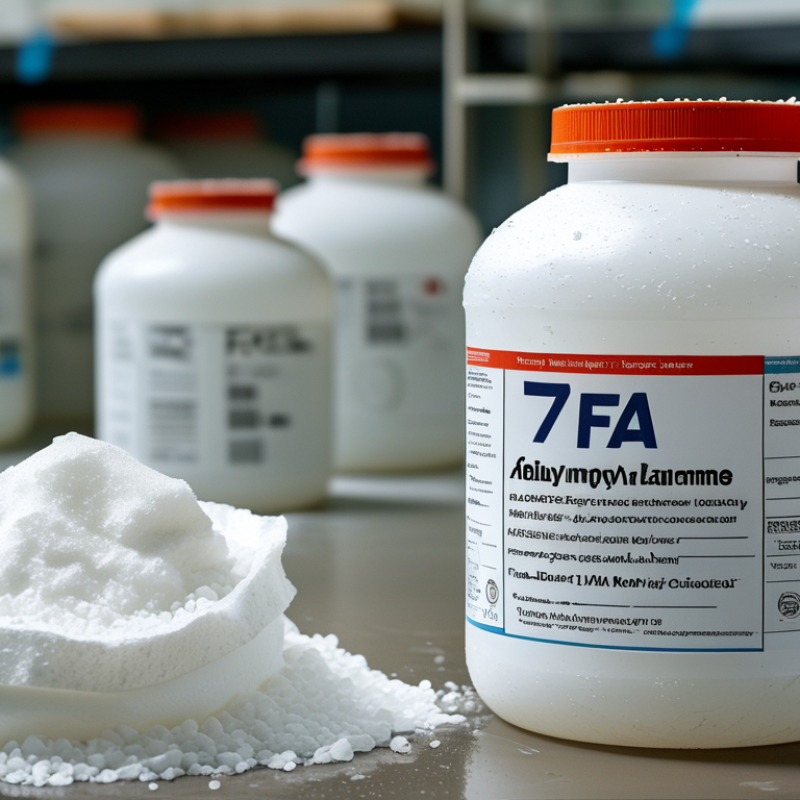
How to Buy Paraformaldehyde PFA 7 Essential Tips?

What Is Paraformaldehyde PFA and Where Is It Used?

Paraformaldehyde (PFA) is a solid polymer that releases formaldehyde when dissolved in water. Laboratories commonly prepare PFA solutions for fixing biological tissues, cells, and specimens. Fixation preserves cellular structure and helps researchers examine samples under a microscope. It is used in immunofluorescence, histology, microscopy, and some research workflows. However, PFA is not a casual laboratory chemical. Its fumes can irritate the eyes, skin, and respiratory system.

When buying PFA, check the stated purity, concentration, particle form, and intended application. A reliable supplier should provide a certificate of analysis, safety data sheet, batch information, and storage guidance. Packaging also matters. Moisture or poor sealing may affect product performance over time. Confirm whether the material suits your preparation method, because laboratory protocols can differ. I have found that small specification details often create larger experimental problems later.

Tips: Choose a supplier with traceable documentation. Check the manufacturing date and recommended storage temperature. Use suitable gloves, eye protection, and local exhaust ventilation. Prepare solutions only under approved laboratory procedures. Do not judge quality by appearance alone. Clear powder is not proof of purity. Review institutional rules before purchasing or handling PFA. Some procedures require additional testing, and this point is easy to overlook. Keep containers closed, labeled, and away from incompatible materials.cuntegn

How to Define Your PFA Grade, Purity, and Formulation Needs

Choosing paraformaldehyde PFA starts with defining the exact grade your work requires. Reagent-grade PFA may suit routine sample fixation, while molecular biology or electron microscopy applications demand tighter impurity controls. Do not rely on the word “high purity” alone. Check the certificate of analysis for assay value, moisture, insoluble matter, acidity, and residual solvents. These details can affect tissue morphology, staining quality, or downstream analysis.

Purity requirements should match your method, not an impressive specification sheet. For sensitive imaging, trace metals and insoluble particles may matter greatly. For routine preservation, those limits may be less critical. Review the safety data sheet and batch documentation before purchasing. Ask whether testing covers the actual lot supplied. A certificate without batch information deserves caution.

Formulation is equally important. PFA may be supplied as a solid powder, granules, or a prepared aqueous solution. Solid material offers longer storage flexibility, but it requires controlled preparation and careful handling. A solution is convenient, yet concentration can change during storage. Check the stated concentration, stabilizers, packaging, expiration date, and storage temperature. I have seen buyers focus on purity while overlooking formulation compatibility. That mistake can create inconsistent fixation results. Define your application, acceptable impurities, concentration range, and storage plan in writing before comparing suppliers. Safety and regulatory requirements should guide every purchase decision.

How to Evaluate PFA Suppliers and Product Documentation

When buying paraformaldehyde PFA, supplier evaluation should begin with documents, not price. In routine laboratory purchasing, I check the certificate of analysis, safety data sheet, specification sheet, and lot number. The documents should state concentration, solvent, pH, appearance, storage temperature, expiry date, and test methods. Missing details create delays. Sometimes, even experienced buyers overlook the solvent.

Tip: Request a recent sample CoA before placing a large order. Compare its values with your protocol.

The supplier should also explain batch traceability and complaint handling. ISO’s 2023 Survey reported more than one million ISO 9001 certificates worldwide. Certification does not prove every PFA batch is perfect. It does show that a documented quality system may exist. Ask whether each lot receives identity, concentration, and contamination testing. For microscopy or tissue processing, small differences can affect staining, fixation, or background artifacts. A clear change-control procedure matters when raw materials or manufacturing sites change.

Tip: Check whether the CoA matches the exact product lot. A generic specification is not enough.

Review the SDS carefully, especially hazard classification, transport information, exposure controls, and emergency measures. The supplier should provide controlled document revisions, not an old PDF copied from another product. I would also request representative stability data and storage guidance. Reports from the European Chemicals Agency emphasize the importance of accurate hazard communication across chemical supply chains. Still, supplier claims deserve verification. That uncomfortable step may prevent an expensive failed experiment.

How to Compare Packaging, Pricing, Storage, and Shipping Conditions

How to Buy Paraformaldehyde PFA: 7 Essential Tips

Buying paraformaldehyde PFA requires more than comparing price per kilogram. Check the assay, particle form, moisture content, lot number, and certificate of analysis. Packaging should include a sealed primary liner, rigid outer protection, and tamper evidence. Small packages reduce repeated exposure, but larger packs may lower unit costs. The cheaper option is not always better.

Tip: Compare the complete delivered cost. Include testing, hazardous-material fees, customs handling, and expedited shipping. Ask whether the quoted price covers temperature monitoring and replacement for damaged goods. Storage instructions should be specific. A cool, dry, well-ventilated cabinet is usually preferable. Keep containers tightly closed and away from incompatible chemicals. NIOSH’s Pocket Guide lists formaldehyde exposure limits of 0.016 ppm as a 10-hour recommended exposure limit and 0.1 ppm as a ceiling limit. That makes packaging integrity and workplace ventilation practical concerns, not paperwork.

Tip: Review shipping conditions before placing the order. The supplier should provide the safety data sheet, transport classification, emergency contact, and recommended transit duration. Compare standard and expedited routes. Delays can increase moisture uptake or product degradation. IATA’s Dangerous Goods Regulations emphasize accurate classification and documentation for air transport. USP General Chapter <659> also highlights the importance of suitable packaging and storage controls. One detail is easy to miss: a strong outer box cannot compensate for a weak inner seal. Ask for recent shipment photos or packaging specifications. Some buyers focus on price first, then discover storage costs were never included.

How to Verify PFA Quality, Safety, and Regulatory Compliance

When buying paraformaldehyde (PFA), quality verification starts before payment. Ask for a current certificate of analysis (CoA) tied to the exact lot. Check assay, moisture, insoluble matter, and manufacturing date. The product name alone proves little. A clear specification should state concentration, grade, particle form, and recommended storage. Lot numbers must appear on both the container and shipping documents. Small details matter here.

Safety evidence should be equally concrete. Request the safety data sheet (SDS), hazard classification, exposure controls, and emergency guidance. Confirm that the packaging is sealed, intact, and suitable for the material. Your facility should have local exhaust ventilation, compatible gloves, eye protection, and trained handling procedures. Never rely on smell as a warning. It is unreliable. Review the expiry date and storage temperature before opening the container. I have seen purchasing teams check price first, then discover missing documents. That sequence needs reconsideration.

Regulatory compliance depends on location and use. Verify applicable chemical registration requirements, labeling rules, transport controls, and waste procedures with your institution’s safety officer. Keep supplier declarations, CoAs, SDS versions, purchase records, and receiving photographs. Independent testing may be sensible for critical experiments or unfamiliar sources. Ask whether the test method is validated and whether results are traceable. No document is perfect. A certificate can be accurate yet outdated. Recheck it when the lot, formulation, or intended application changes.

How to Buy Paraformaldehyde PFA 7 Essential Tips? - How to Verify PFA Quality, Safety, and Regulatory Compliance
Tip What to Verify Reliable Evidence or Test Practical Acceptance Indicators Red Flags Before Purchase
1. Confirm Product Identity Verify that the material is paraformaldehyde and not a different formaldehyde-based product, such as formalin or a prepared aqueous solution. Review the product specification, Certificate of Analysis (CoA), Safety Data Sheet (SDS), Chemical Abstracts Service (CAS) number, and grade designation. The documentation identifies paraformaldehyde, commonly associated with CAS 30525-89-4, and clearly states the intended laboratory or industrial grade. The product name is vague, the CAS number is missing, or the documentation describes only formaldehyde solution.
2. Check Assay and Composition Assess the stated paraformaldehyde content and control of residual formaldehyde, moisture, acidity, ash, and insoluble matter. Compare the lot-specific CoA with the published specification and request the analytical methods used for assay and impurity testing. The CoA includes numerical results, test methods, specification limits, lot number, test date, and an authorized quality release statement. Only a generic “high purity” claim is provided, or the CoA contains no lot-specific results or acceptance limits.
3. Evaluate Physical Condition Inspect the appearance, particle form, color, odor, and evidence of decomposition or moisture exposure. Request product photographs or inspect the container on receipt; compare the material with the supplier’s specification. Material is typically supplied as a white or off-white solid or powder, with uniform appearance and no visible clumps, discoloration, or excessive odor. Darkening, wet or hardened lumps, damaged seals, strong unexpected odor, or unexplained variation between containers.
4. Verify Stability and Shelf Life Confirm manufacturing date, retest or expiry date, recommended storage conditions, and packaging suitability. Review the CoA, SDS, technical data sheet, and transport or storage instructions. Check that the lot has adequate remaining shelf life. Packaging is tightly closed and moisture-resistant, with clear lot identification and storage guidance; the material is protected from heat, moisture, and incompatible conditions. No date code, unclear storage instructions, excessive remaining shelf-life uncertainty, or packaging that permits moisture ingress.
5. Assess Worker and Laboratory Safety Identify hazards associated with formaldehyde release, dust, inhalation, skin or eye contact, sensitization, and potential carcinogenicity classifications. Read the current SDS, especially hazard classification, exposure controls, PPE, first aid, spill response, and disposal instructions. The SDS is current, follows the applicable GHS or local hazard-communication format, and recommends suitable ventilation, protective gloves, eye protection, and respiratory controls where required. Missing SDS, outdated hazard information, no exposure-control guidance, or instructions that treat the powder as non-hazardous without justification.
6. Confirm Regulatory and Shipping Compliance Determine whether the product meets the legal requirements of the destination country and the user’s industry, institution, or facility. Request the SDS, regulatory statement, customs information, transport classification, and applicable registration or inventory status. Confirm requirements with the responsible compliance authority. Supplier documentation identifies applicable GHS labeling, substance-inventory status, transport information, and any restrictions relevant to the destination and intended use. The seller cannot provide regulatory documents, transport classification is inconsistent, or the paperwork does not match the product and shipment.
7. Qualify the Supplier and Lot Evaluate traceability, quality-system controls, technical support, complaint handling, and consistency between production lots. Request sample documentation, references to quality procedures, change-notification terms, lot traceability, and a sample for internal verification when appropriate. Supplier provides consistent lot records, prompt technical responses, controlled packaging, documented change control, and a clear process for nonconforming material. Untraceable material, pressure to purchase without documentation, inconsistent specifications, or refusal to provide a representative sample or lot records.

FAQS

: What is paraformaldehyde (PF

)?

Where is PFA used?

Laboratories use PFA to preserve tissues, cells, and specimens for microscopy, histology, and immunofluorescence.

What documents should a supplier provide?

Request a current certificate of analysis, safety data sheet, specification sheet, lot number, and storage guidance.

Which details should appear on the certificate of analysis?

Check concentration, solvent, pH, appearance, moisture, insoluble matter, test methods, manufacturing date, and expiry date.

Why does the exact product lot matter?

A generic specification may not represent your container. The certificate should match the lot number on the packaging.

How should PFA quality be verified?

Compare the stated purity, particle form, concentration, and storage requirements with your approved laboratory protocol.

What safety precautions are needed when handling PFA?

Use suitable gloves, eye protection, local exhaust ventilation, labeled containers, and trained handling procedures.

Can smell confirm whether PFA is safe?

No. Smell is an unreliable warning. Exposure controls and documented procedures matter more.

How should PFA packaging be checked?

Confirm that the container is sealed, intact, labeled, and free from moisture damage. Small details matter.

What should buyers review before ordering PFA?

Review institutional rules, transport requirements, waste procedures, storage temperature, and intended application. Price alone proves little.

Conclusion

Buying Paraformaldehyde Pfa requires more than comparing prices. Start by understanding its role as a formaldehyde-releasing chemical commonly used in laboratory fixation, tissue preparation, microscopy, and selected research applications. Define the required grade, concentration, purity, physical form, and formulation according to your procedure, while considering whether additives, stabilizers, or ready-to-use solutions are appropriate.

When evaluating suppliers, request clear product specifications, certificates of analysis, safety data sheets, batch information, and evidence of consistent quality. Compare packaging size, container compatibility, total cost, lead time, and shipping conditions, especially because temperature, light, and ventilation can affect product stability and handling requirements. Before purchase, verify that the material is properly labeled, securely packaged, and supported by suitable storage and disposal guidance. Confirm that the supplier follows applicable safety and regulatory requirements, and establish internal procedures for receiving, storing, handling, and documenting the product. A careful assessment helps ensure reliable performance, safer laboratory use, and better long-term purchasing decisions.


Charlotte

Charlotte

Charlotte is a seasoned marketing professional with a deep understanding of the company's portfolio and a passion for elevating its presence in the market. With a keen eye for detail and a commitment to excellence, she ensures that our professional blog is regularly updated with insightful articles......